Ten African Country Spotlights
Africa is a continent of 54 countries, each with its own history, languages and ways of life. These ten spotlights are a starting point, chosen to cover every region and to connect with the places, foods and music we write about.
Population figures are Britannica's 2026 estimates, rounded. Language lists follow each country's constitution as summarized by Britannica, and many more languages are spoken every day than any official list can show.
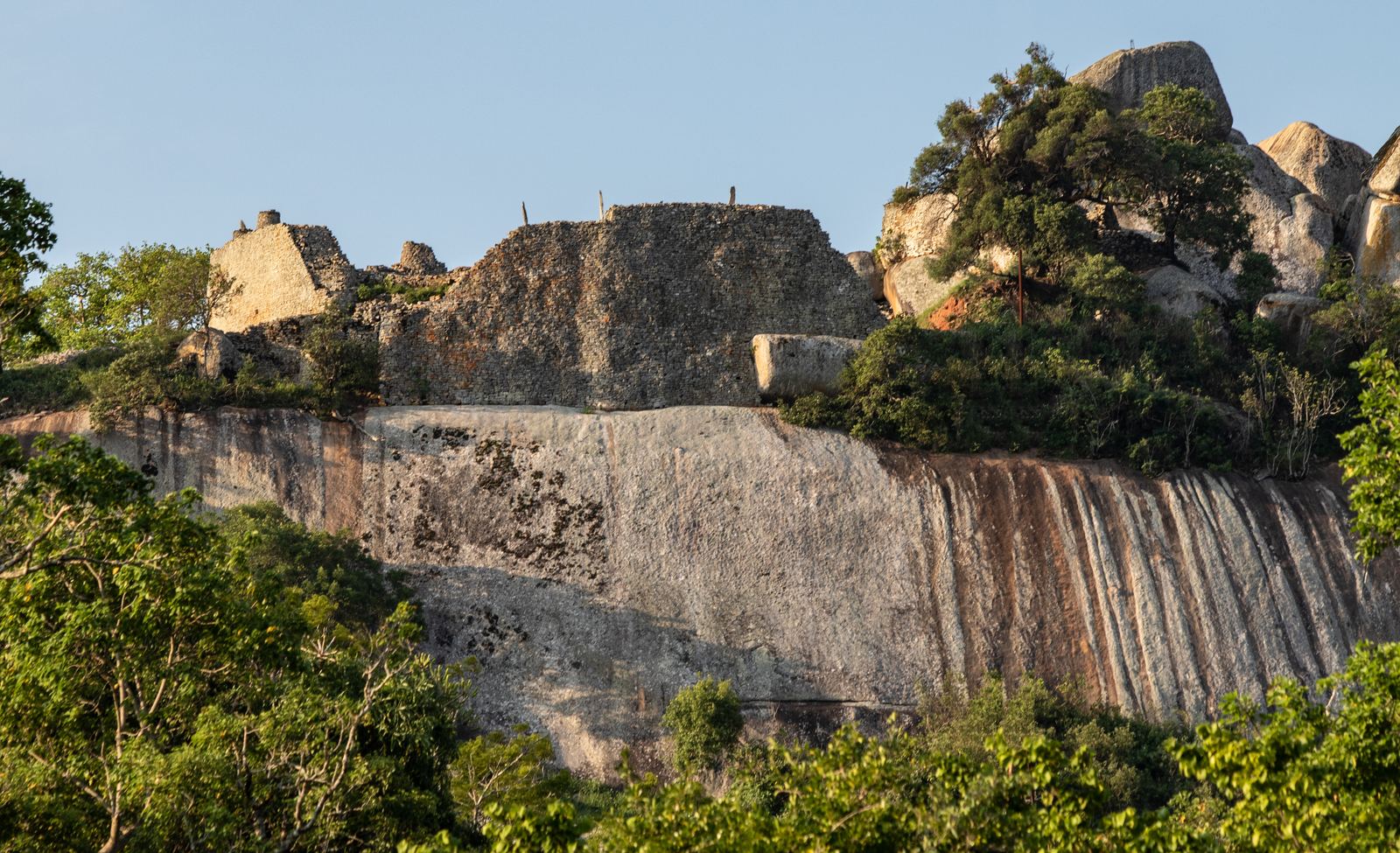
The Hill Complex, Great Zimbabwe: Andrew Moore, CC BY-SA 2.0
North and West Africa
Morocco
A kingdom on the Atlantic and the Mediterranean where Amazigh and Arab heritage meet. Its old medinas, such as Fes, are still busy working cities, and the tagine pot is a fixture of home kitchens.
- Capital
- Rabat
- Population
- About 36.7 million (2026 est.)
- Official languages
- Arabic and Tamazight
- Highlight
- The medina of Fes
Senegal
Home of ceebu jën, the fish and rice dish from Saint-Louis that UNESCO lists as living heritage, and of mbalax, the dance music made famous by Youssou N'Dour. Wolof is widely spoken alongside French.
- Capital
- Dakar
- Population
- About 19.6 million (2026 est.)
- Official language
- French
- Highlight
- Ceebu jën and mbalax
Read: Jollof rice and its Wolof roots Source: britannica.com
Mali
Timbuktu's family libraries hold centuries of handwritten scholarship, saved by librarians during the 2012 occupation. Under the 2023 constitution, Mali's 13 national languages became official and French became a working language.
- Capital
- Bamako
- Population
- About 25.3 million (2026 est.)
- Official languages
- 13 national languages, including Bambara, Fula, Songhai and Tamasheq
- Highlight
- The Timbuktu manuscripts
Ghana
The birthplace of highlife music and of kente, the strip-woven cloth of Asante and Ewe weavers. Accra's coast and Kumasi's markets are two very different faces of the same country.
- Capital
- Accra
- Population
- About 34.2 million (2026 est.)
- Official language
- English
- Highlight
- Kente cloth
Nigeria
Africa's most populous country, home to Yoruba, Hausa, Igbo and hundreds of other peoples. It gave the world Afrobeat, the Benin Bronzes of Benin City, and one side of the famous jollof rivalry.
- Capital
- Abuja
- Population
- About 239.4 million (2026 est.)
- Official language
- English
- Highlight
- Afrobeat and Fela Kuti
East, Central and Southern Africa
Ethiopia
A highland country with its own script, its own calendar and some of the world's oldest Christian traditions, from the rock-hewn churches of Lalibela to coffee ceremonies at home. Injera made from teff is the everyday bread.
- Capital
- Addis Ababa
- Population
- About 113.8 million (2026 est.)
- Language
- No official language; Amharic is the federal working language
- Highlight
- Lalibela
Kenya
From Nairobi's tech hubs to the coral-stone lanes of Lamu, Kenya spans highlands, savanna and the Indian Ocean coast. Swahili, the language of that coast, is an official language alongside English.
- Capital
- Nairobi
- Population
- About 54.2 million (2026 est.)
- Official languages
- Swahili and English
- Highlight
- Lamu Old Town
Democratic Republic of the Congo
A vast country on the Congo River whose rumba, shared with neighboring Republic of the Congo, filled dance floors across Africa and was added to UNESCO's heritage list in 2021. Lingala is the language of much of that music.
- Capital
- Kinshasa
- Population
- About 116.5 million (2026 est.)
- Official language
- French; national languages Kongo, Lingala, Swahili and Tshiluba
- Highlight
- Congolese rumba
Zimbabwe
The country took its name from Great Zimbabwe, the stone city built by ancestors of the Shona. Its constitution recognizes 16 official languages, from Shona and Ndebele to sign language.
- Capital
- Harare
- Population
- About 16.2 million (2026 est.)
- Official languages
- 16, including Shona, Ndebele and English
- Highlight
- Great Zimbabwe
South Africa
A country with three capitals and 12 official languages, including South African Sign Language. Ndebele women's painted homes, Cape Malay cooking and the amapiano sound all come from here.
- Capitals
- Pretoria (executive), Cape Town (legislative), Bloemfontein (judicial)
- Population
- About 63.4 million (2026 est.)
- Official languages
- 12, including Zulu, Xhosa, Afrikaans, English and Sign Language
- Highlight
- Ndebele house painting
Population figures are estimates and change every year. We use Britannica's 2026 estimates; national statistics offices may publish different numbers.
- Britannica: Morocco Facts & Stats
- Britannica: Senegal Facts & Stats
- Britannica: Mali Facts & Stats
- Britannica: Ghana Facts & Stats
- Britannica: Nigeria Facts & Stats
- Britannica: Ethiopia Facts & Stats
- Britannica: Kenya Facts & Stats
- Britannica: Democratic Republic of the Congo Facts & Stats
- Britannica: Zimbabwe Facts & Stats
- Britannica: South Africa Facts & Stats
- UNESCO: Ceebu jën, a culinary art of Senegal
- UNESCO: Congolese rumba
Facts on this page were checked against these sources (updated Oct 1, 2026). Spot an error? Email hello@fireempireshop.com.