
Great Zimbabwe
The stone city that named a country. Great Zimbabwe was a Shona capital of dry-stone walls built without mortar. Its name, houses of stone, became the name of a nation in 1980.
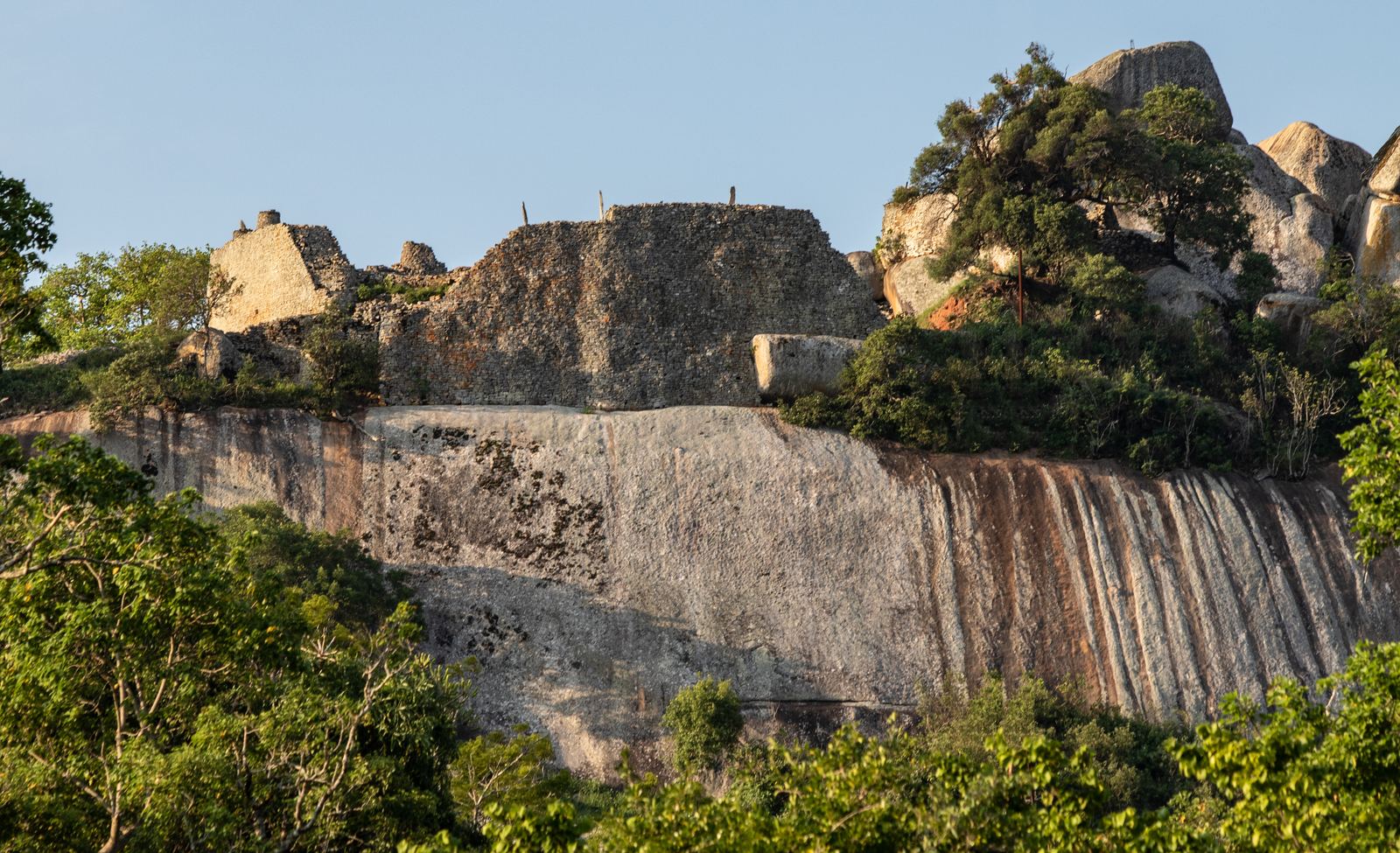
The Hill Complex, Great Zimbabwe: Andrew Moore, CC BY-SA 2.0
A capital of stone
On a granite hillside in what is now southeastern Zimbabwe stand the largest ancient stone structures in Africa south of the Sahara. Between roughly the 12th and 15th centuries, the ancestors of today's Shona people built a city here of curving walls fitted from cut granite blocks, laid without any mortar at all. The skill was in the stacking: each course leans slightly inward, and the walls have stood for centuries.
The site has three main parts. The Hill Complex, the oldest, wraps around natural boulders on a ridge. Below it lies the Great Enclosure, an oval wall more than 250 metres around and in places about 11 metres high, with a solid conical tower inside. Between them spread the valley ruins, where much of the population lived in clay and thatch homes.
Video: Great Zimbabwe National Monument (UNESCO/NHK) (UNESCO), embedded from YouTube.
A whole country is named after this stone city
Great Zimbabwe, built c. 11th-15th century by ancestors of the Shona, has dry-stone granite walls up to about 11 m high; modern Zimbabwe took its name at independence in 1980.
YouTube @BongaraBongara (launching soon). Photos in this Short: Great-zim-aerial-looking-West.JPG - Janice Bell (CC BY-SA 4.0) via Wikimedia Commons | Great inclosure - Great Zimbabwe (15).jpg - Fanny Schertzer (CC BY 3.0) via Wikimedia Commons | Western Entrance to the Great Enclosure - Great Zimbabwe II (46698655045).jpg - Andrew Moore from Johannesburg, South Africa (CC BY-SA 2.0) via Wikimedia Commons | Great Zimbabwe Ruins.jpg - Trinapee (CC BY-SA 4.0) via Wikimedia Commons | Great-Zimbabwe-ruins-outer-walls-3-1200.jpg - Edwin Smith and Andrew Dale (CC
Gold, cattle and the Indian Ocean
Great Zimbabwe grew rich on cattle and on control of gold from the Zimbabwe plateau. Gold travelled to the Swahili coast, to ports like Sofala and Kilwa, and from there across the Indian Ocean. Archaeologists have found glass beads, Persian pottery and Chinese porcelain at the site, proof that this inland capital was tied into one of the world's great trade networks.
By the 15th century the city declined, probably as farmland, grazing and trade routes shifted. Power moved to successor states such as Mutapa in the north and Torwa, centred at Khami, in the west.
A history once denied
When European settlers and treasure hunters reached the ruins in the late 19th century, many refused to believe Africans had built them and invented foreign builders instead. Archaeologists working in 1905 and again in 1929 showed clearly that the city was African. Even so, the white minority government of Rhodesia kept pressing the false story for decades because it served colonial rule.
The name of a nation
When the country won its independence in 1980, it took the name Zimbabwe, from the Shona phrase for houses of stone. Eight soapstone birds carved on tall columns were found at the site, and one of them, the Zimbabwe Bird, appears on the national flag and coat of arms. Several of the birds taken abroad in the colonial era have since been returned. Today Great Zimbabwe is a national monument and a UNESCO World Heritage Site, and a place where Zimbabweans see the deep roots of their own history.
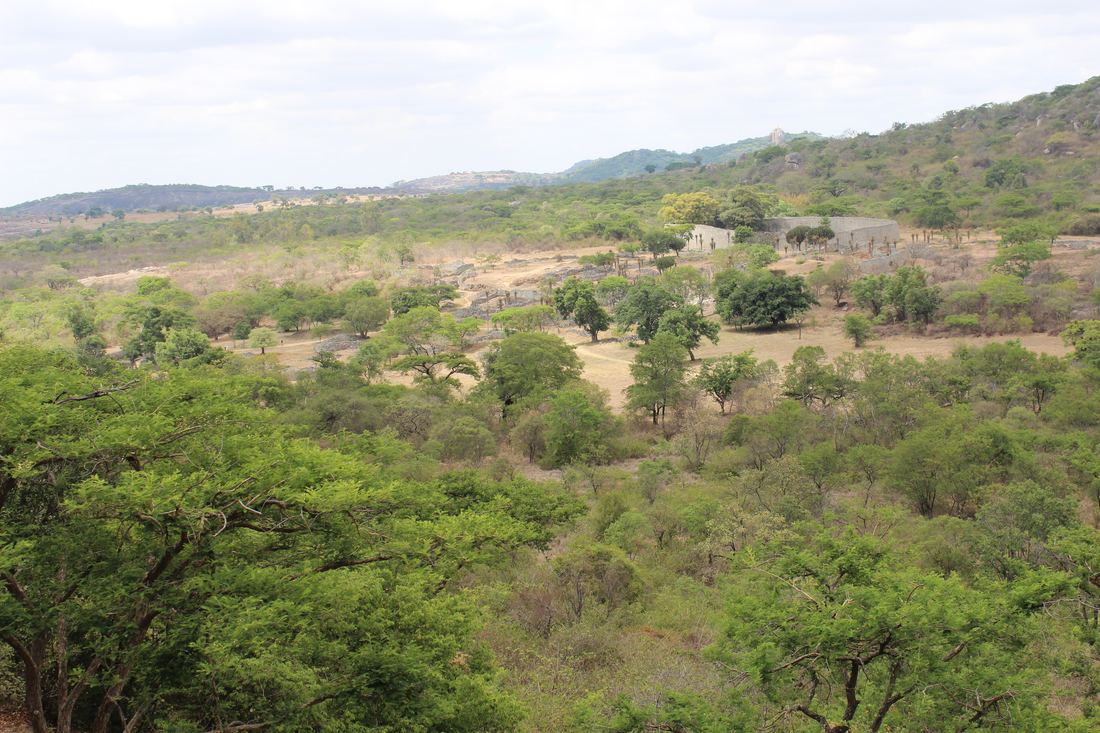
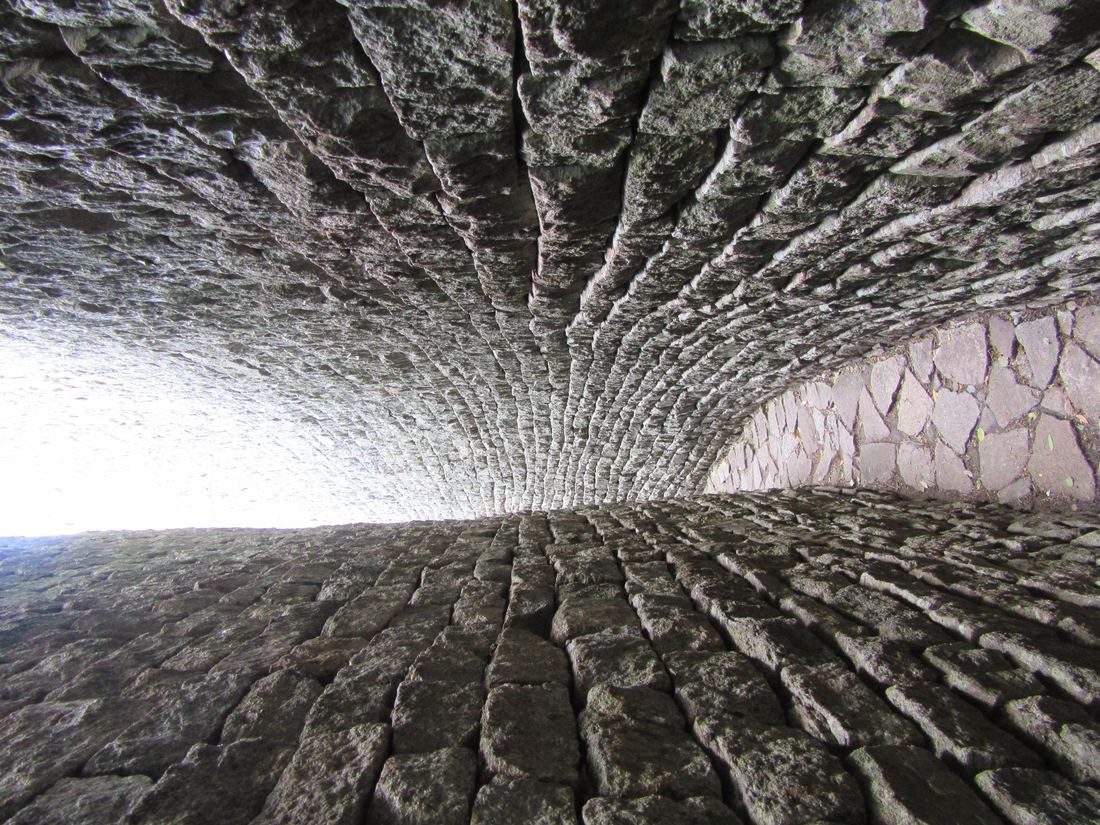
- The Hill Complex, Great Zimbabwe: Andrew Moore, CC BY-SA 2.0
- The Great Enclosure: Todinirunganga, CC BY-SA 4.0
- Passage inside the Great Enclosure: amanderson2, CC BY 2.0
- Short photos: Great-zim-aerial-looking-West.JPG - Janice Bell (CC BY-SA 4.0) via Wikimedia Commons | Great inclosure - Great Zimbabwe (15).jpg - Fanny Schertzer (CC BY 3.0) via Wikimedia Commons | Western Entrance to the Great Enclosure - Great Zimbabwe II (46698655045).jpg - Andrew Moore from Johannesburg, South Africa (CC BY-SA 2.0) via Wikimedia Commons | Great Zimbabwe Ruins.jpg - Trinapee (CC BY-SA 4.0) via Wikimedia Commons | Great-Zimbabwe-ruins-outer-walls-3-1200.jpg - Edwin Smith and Andrew Dale (CC BY-SA 4.0) via Wikimedia Commons | Wall of the great enclosure (far), Great Zimbabwe.JPG - Jens Klinzing (CC BY 3.0) via Wikimedia Commons | Zimbabwe wall.jpg - User:Ulamm (Public domain) via Wikimedia Commons | The Great Zimbabwe Hill Complex.jpg - Andrew Moore (CC BY-SA 2.0) via Wikimedia Commons
Text written by Bongara Bongara.



.jpg)
