
The Timbuktu Manuscripts
Libraries of the Sahel, saved in secret. Timbuktu's family libraries hold centuries of handwritten books on science, law and poetry. In 2012 librarians smuggled them to safety.
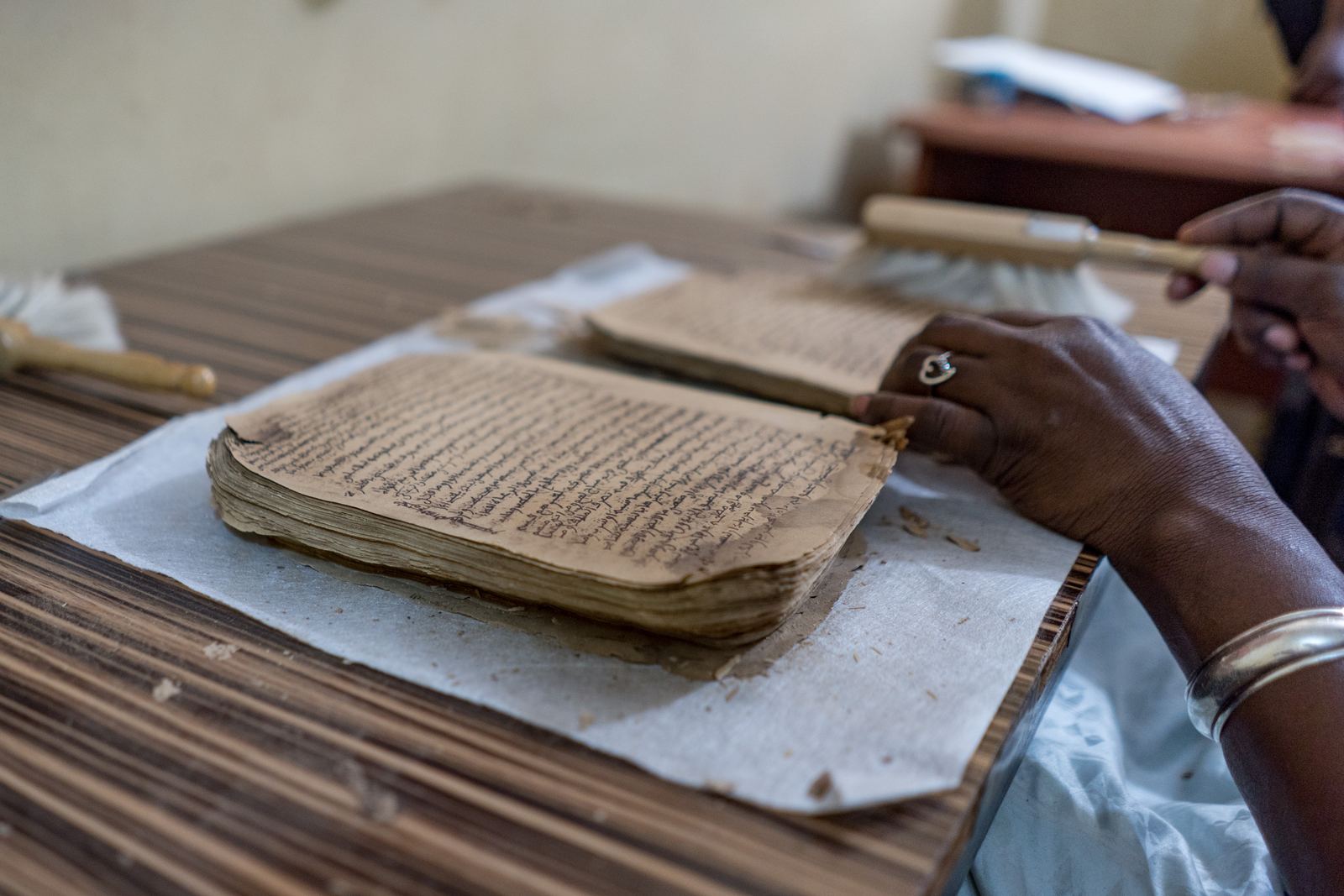
A Timbuktu manuscript: Mark Fischer, CC BY-SA 2.0
A city of scholars
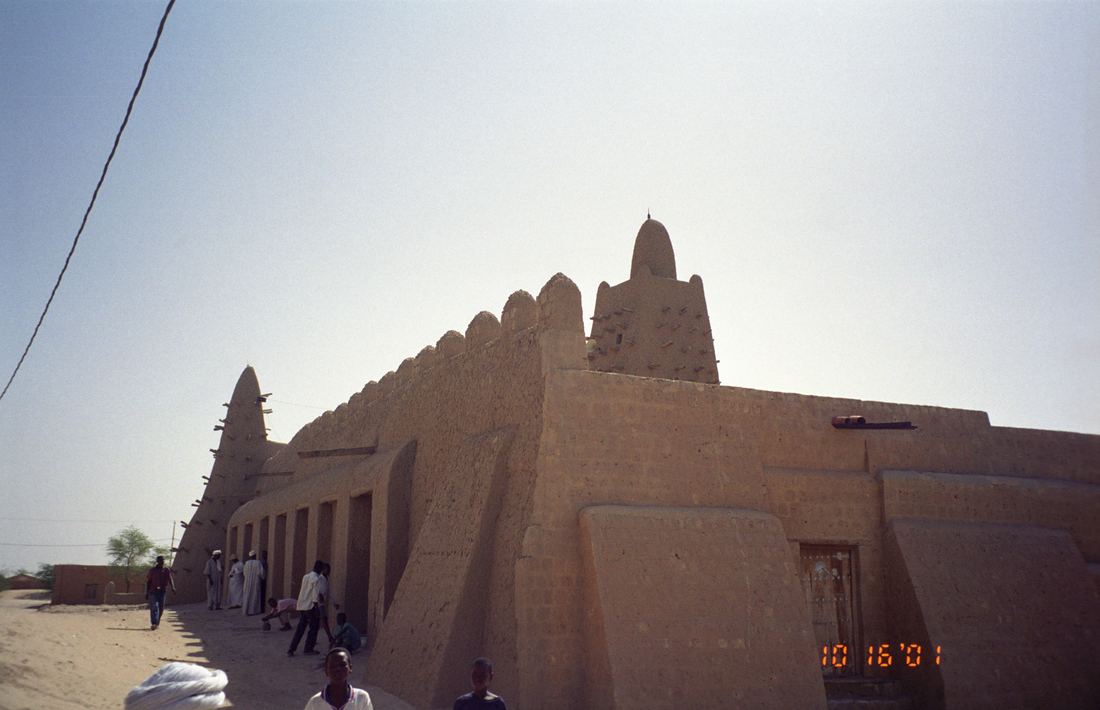
Timbuktu began around the 12th century as a seasonal camp near the bend of the Niger River in today's Mali. It grew into a crossroads where camel caravans from across the Sahara met boats on the river, trading salt, gold, cloth and books. Under the Mali Empire, the emperor Mansa Musa had the Djinguereber Mosque built in the 1320s, and under the Songhay Empire in the 15th and 16th centuries the city became famous for its scholars and its mosques of Djinguereber, Sankore and Sidi Yahia.
Students came from across West and North Africa to study with teachers who owned private collections of books. Paper arrived by caravan, scribes copied texts by hand, and books became valuable trade goods in their own right.
Video: The hidden treasures of Timbuktu - Elizabeth Cox (TED-Ed), embedded from YouTube.
Librarians smuggled a whole library out of Timbuktu
In 2012-2013 librarians and families secretly moved hundreds of thousands of Timbuktu's historic manuscripts to Bamako to protect them from militants occupying the city.
YouTube @BongaraBongara (launching soon). Photos in this Short: Timbuktu-manuscripts-astronomy-mathematics.jpg - Elias Altmimi (Public domain) via Wikimedia Commons | Timbuktu-manuscripts-astronomy-tables.jpg - Unknown authorUnknown author (Public domain) via Wikimedia Commons | Sankore Moske Timboektoe.JPG - Baz Lecocq at nl.wikipedia (CC BY 2.5 nl) via Wikimedia Commons | Sankore Madrasah.jpg - Dr. Ondřej Havelka (cestovatel) (CC BY-SA 4.0) via Wikimedia Commons | Djinguereber Mosque, Timbuktu, Mali.jpg - Dr. Ondřej Havelka (cestovatel) (CC BY-SA 4.0) via
What the manuscripts contain
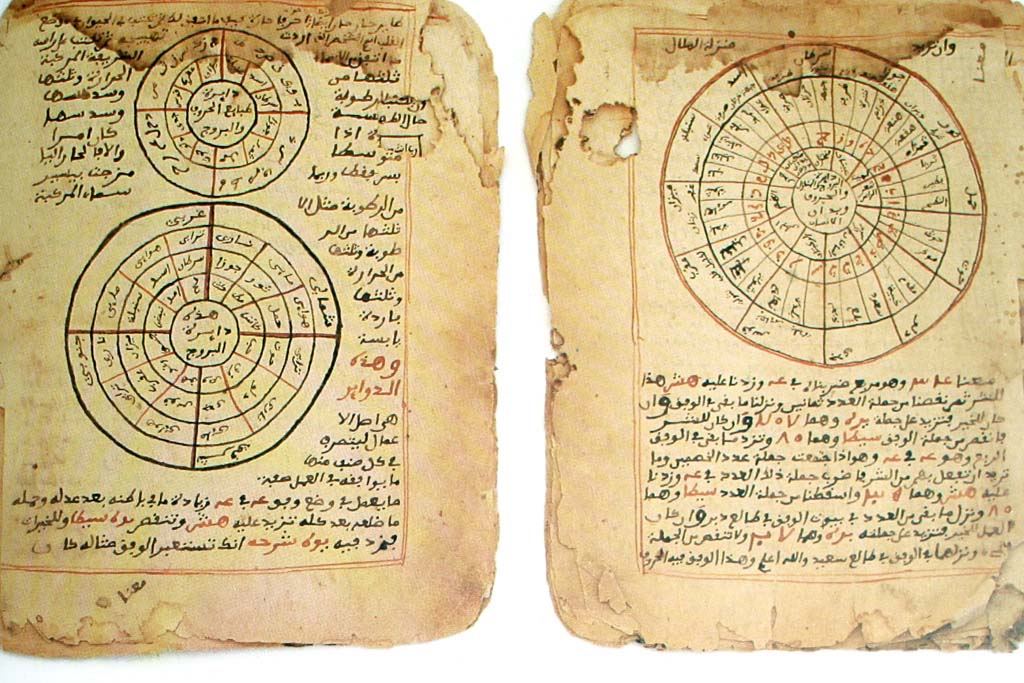
The manuscripts of Timbuktu and the surrounding region are often counted in the hundreds of thousands. Many are in Arabic, while others use Arabic script to write African languages such as Songhay, Fulfulde and Tamasheq, a style known as Ajami. They cover Islamic law and theology, but also astronomy, mathematics, medicine, grammar, history, poetry and everyday business letters and contracts.
Most were kept not in a single great library but by families, passed down for generations in wooden chests and storerooms. In 1973 the government of Mali founded the Ahmed Baba Institute to collect, conserve and study them.
The great rescue
In 2012 armed groups seized northern Mali, including Timbuktu, and destroyed several of the city's historic tombs. Fearing the manuscripts would be next, librarians and families led by the collector Abdel Kader Haidara quietly packed them into metal trunks and rice sacks. Over months, couriers moved them by car, cart and river boat south to the capital, Bamako, slipping past checkpoints.
When the occupiers retreated in early 2013 they set fire to manuscripts at the institute's new building, but the losses were a small share of the whole. The vast majority had already been carried to safety.
Bringing the books home
Since the rescue, conservators in Bamako have cleaned, catalogued and digitised many of the manuscripts, and large parts of the collections can now be viewed online. Some families have begun bringing their books back to Timbuktu. The story is a reminder that Africa has long written histories, and that ordinary people risked a great deal to keep them alive.
- A Timbuktu manuscript: Mark Fischer, CC BY-SA 2.0
- Astronomy and mathematics pages: Elias Altmimi, Public domain
- Djinguereber Mosque, Timbuktu: upyernoz, CC BY 2.0
- Short photos: Timbuktu-manuscripts-astronomy-mathematics.jpg - Elias Altmimi (Public domain) via Wikimedia Commons | Timbuktu-manuscripts-astronomy-tables.jpg - Unknown authorUnknown author (Public domain) via Wikimedia Commons | Sankore Moske Timboektoe.JPG - Baz Lecocq at nl.wikipedia (CC BY 2.5 nl) via Wikimedia Commons | Sankore Madrasah.jpg - Dr. Ondřej Havelka (cestovatel) (CC BY-SA 4.0) via Wikimedia Commons | Djinguereber Mosque, Timbuktu, Mali.jpg - Dr. Ondřej Havelka (cestovatel) (CC BY-SA 4.0) via Wikimedia Commons | Djinguereber Mosque.jpg - Dr. Ondřej Havelka (cestovatel) (CC BY-SA 4.0) via Wikimedia Commons | Timbuktu-139076.jpg - UNESCO Bureau of Mali (CC BY-SA 3.0 igo) via Wikimedia Commons | Timbuktu Manuscript (48522180467).jpg - Mark Fischer (CC BY-SA 2.0) via Wikimedia Commons
Text written by Bongara Bongara.



.jpg)

