Moroccan Tagine
Slow cooking under a clay cone. The tagine is both a cone-lidded clay pot and the slow stew cooked in it, a North African tradition with Amazigh roots. Includes a recipe.
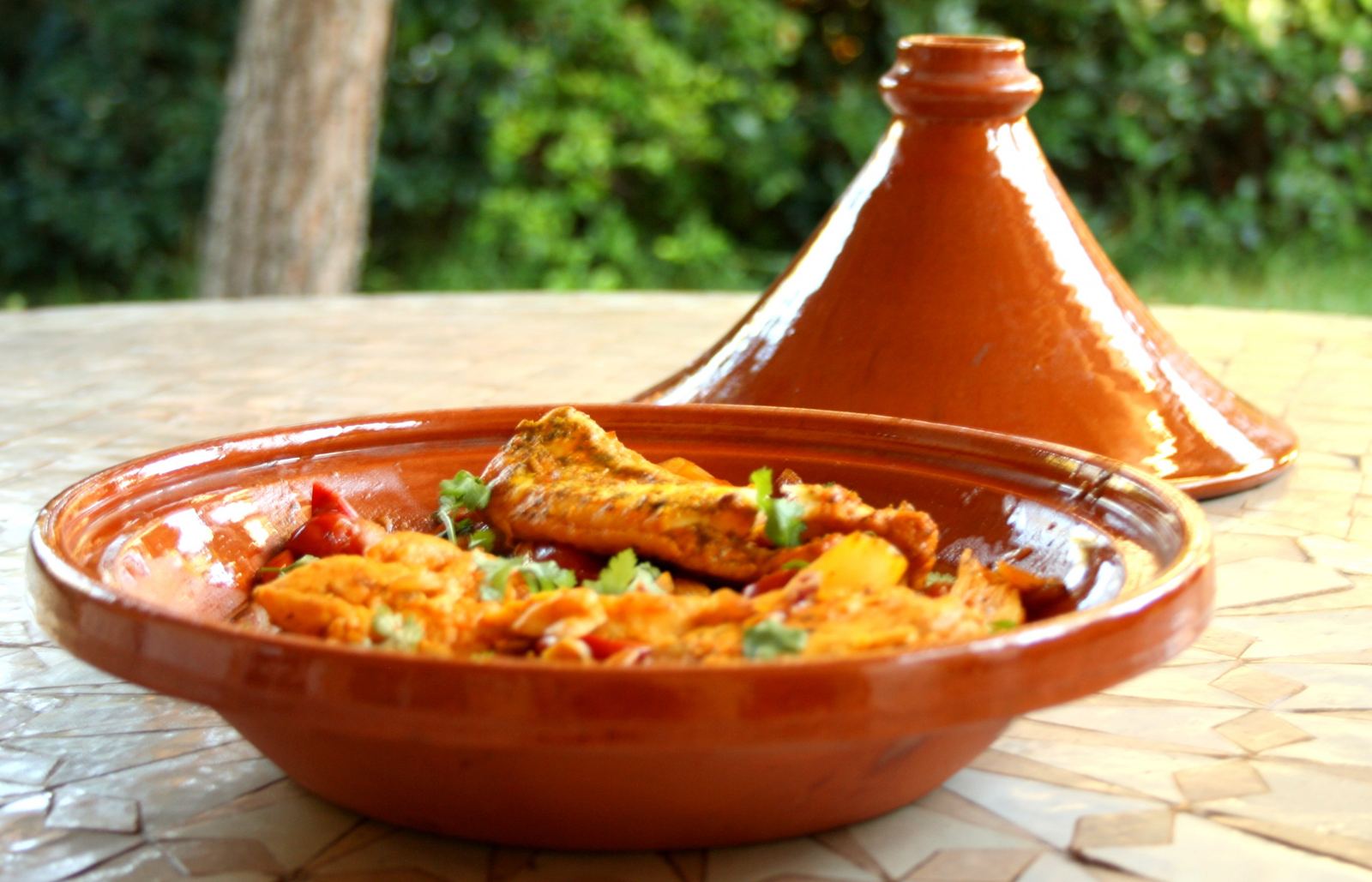
A Moroccan tagine: Bawdeep2010, CC BY-SA 4.0
A pot and a dish
In Morocco, the word tagine means two things: a clay cooking pot and the dish made in it. The pot has a shallow round base and a tall lid shaped like a cone. As food simmers slowly, steam rises into the cone, cools, and runs back down, keeping meat and vegetables moist while using very little water. That made the design well suited to dry regions where water and fuel were precious.
Slow cooking in clay is rooted in the traditions of the Amazigh, or Berber, peoples of North Africa. Over centuries, Arab, Andalusian and Ottoman influences added spices, dried fruits and nuts to the repertoire.
Video: How to Make a Tagine with Chef Mourad Lahlou | Williams-Sonoma (Williams Sonoma), embedded from YouTube.
Flavours of the Maghreb
Classic Moroccan tagines include chicken with preserved lemon and olives, lamb with prunes and almonds, beef with quince, and fish with chermoula, a marinade of herbs, garlic and spices. Vegetable tagines of carrots, potatoes, courgettes and peas are everyday food. Many cooks season with ras el hanout, a blend whose name means head of the shop, because it was the spice seller's best mixture.
Preserved lemons, made by packing lemons in salt for several weeks, are one of the most distinctive tastes in Moroccan cooking. Their soft rind adds a bright, salty, floral flavour.
Regional styles vary. In Marrakech, cooks are known for tangia, a related dish slow-cooked in a tall clay urn in the embers of a public bathhouse furnace. In the Rif and the Atlas mountains, tagines often feature lamb, goat or seasonal vegetables cooked over charcoal braziers.
Eating together
A tagine is usually brought straight to the table in its pot. Family and guests sit around it and eat from their own side, using pieces of round bread, called khobz, to pick up meat and sauce. Couscous is a separate dish in Morocco, traditionally served on Fridays, so tagine and couscous are not normally served together.
Tagine beyond Morocco
Algeria, Tunisia and Libya have their own versions, and in Tunisia the word tajine names something quite different: a baked dish of eggs, meat and cheese, closer to a frittata. Clay tagines are made in pottery centres such as Safi and Fes. Unglazed pots should be soaked and seasoned before first use and heated gently, since sudden heat can crack the clay.
Make Moroccan Tagine at home
Ingredients
- 1.2 kg chicken thighs and drumsticks, skin on
- 2 onions, finely chopped
- 3 garlic cloves, crushed
- 1 tsp ground ginger
- 1 tsp ground turmeric
- 1 tsp ground cumin
- 1 tsp sweet paprika
- 1/2 tsp black pepper
- A pinch of saffron threads soaked in 2 tbsp warm water (optional)
- 1 small bunch each fresh coriander and parsley, chopped
- 3 tbsp olive oil
- 1 cup water or chicken stock
- 1 preserved lemon, rind only, cut into strips
- 1 cup green or violet olives
- Salt to taste
Method
- Mix the garlic, ginger, turmeric, cumin, paprika, pepper, saffron, half the herbs, the olive oil and a little salt. Rub it over the chicken and leave for at least 30 minutes, or overnight in the fridge.
- Spread the onions over the base of a tagine or a heavy lidded pan. Arrange the chicken on top and pour in any remaining marinade.
- If using a clay tagine, place it on a heat diffuser over low heat. Otherwise use low to medium heat. Add the water or stock, cover and cook gently.
- Simmer for 50 to 60 minutes, turning the chicken once or twice, until it is very tender and the onions have melted into a thick sauce. Add a splash of water if it looks dry.
- Add the preserved lemon strips and olives, cover again and cook 10 minutes more.
- Taste and adjust the salt; preserved lemon and olives are already salty. Scatter over the remaining herbs and serve from the pot with fresh bread for scooping.
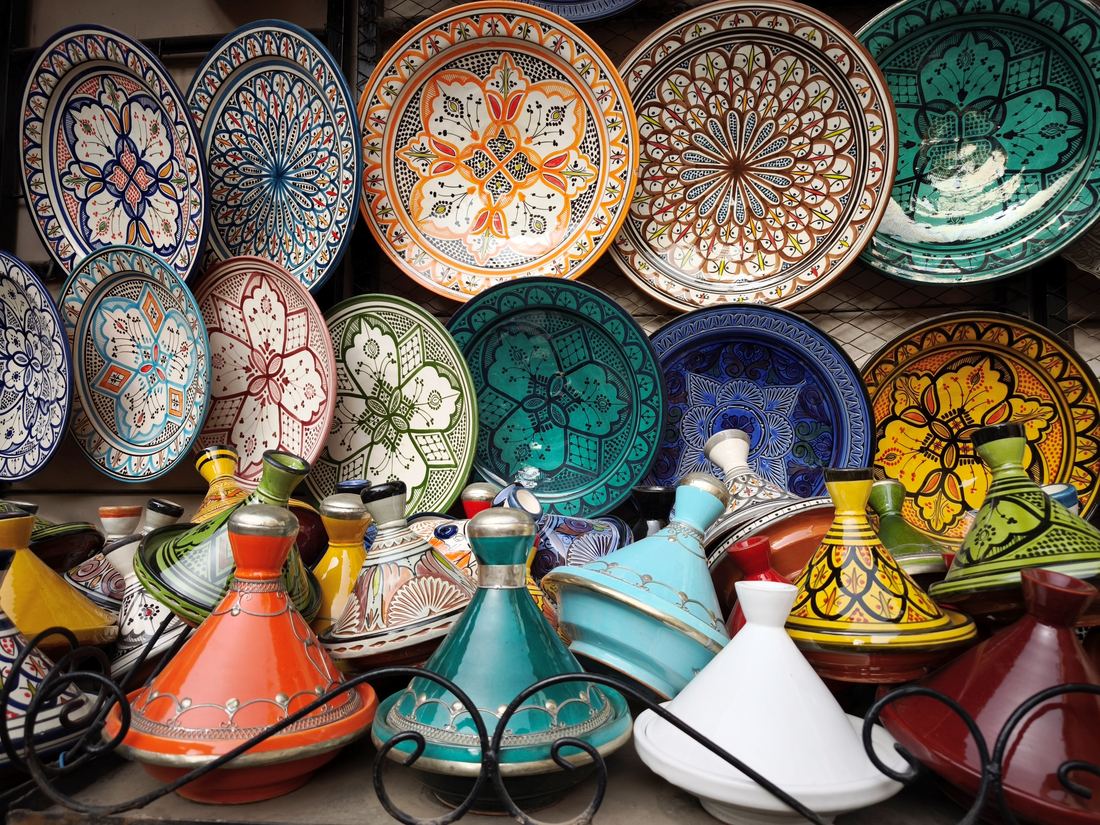
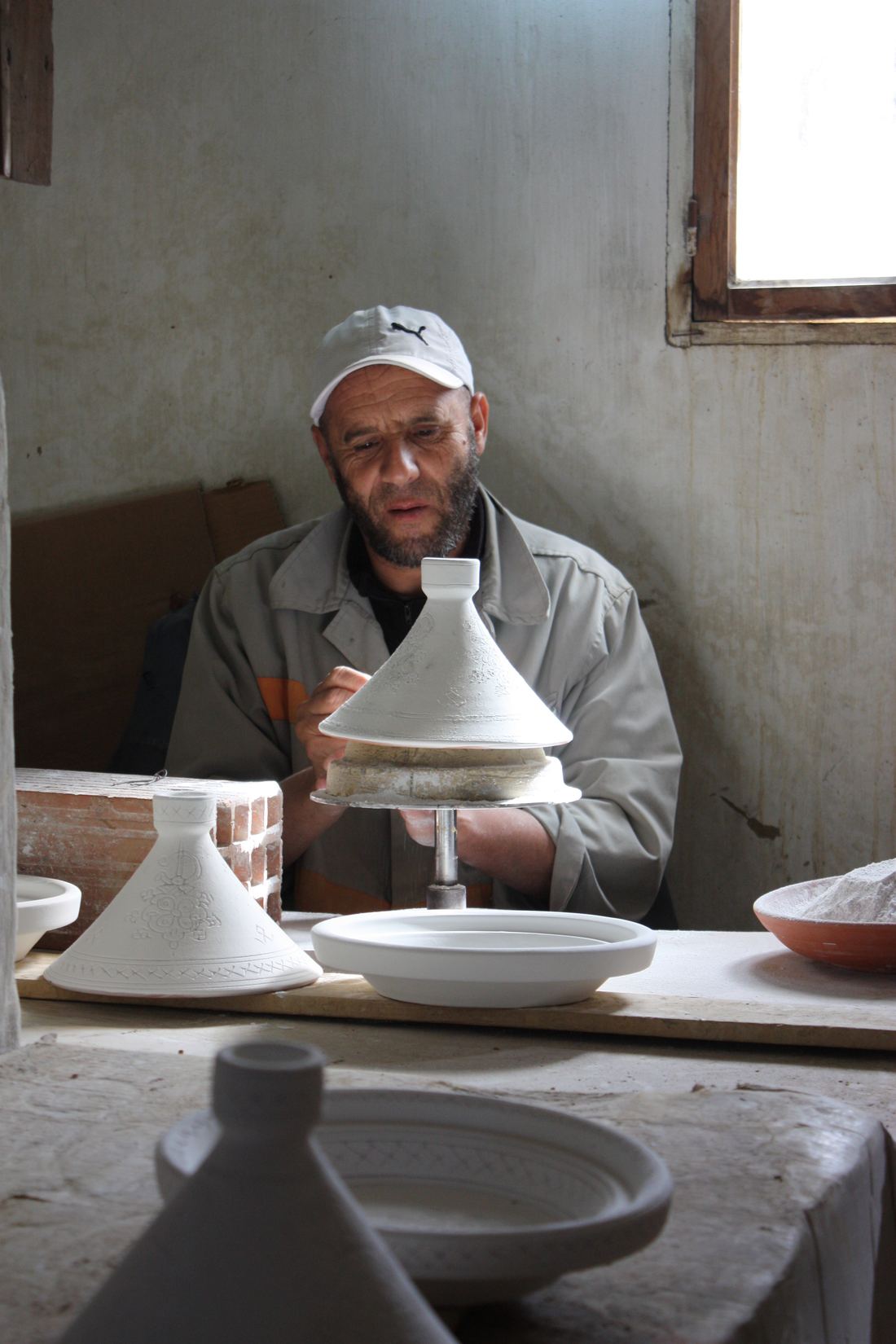
- A Moroccan tagine: Bawdeep2010, CC BY-SA 4.0
- Painted tagines for sale: Simo.Albo80, CC BY-SA 4.0
- A potter shaping a tagine: Soufiane mbarki, CC BY-SA 4.0
Text written by Bongara Bongara.